Nagoya Station sits at the center of a major transportation network in central Japan. JR Central lines, Tokaido Shinkansen tracks, and the Nagoya Rinkai Rapid Transit Aonami Line are all concentrated inside the station building. Just outside the building you can also find the Nagoya Subway Station, the private Meitetsu Nagoya and Kintetsu Nagoya railway stations, and highway bus and city bus terminals.
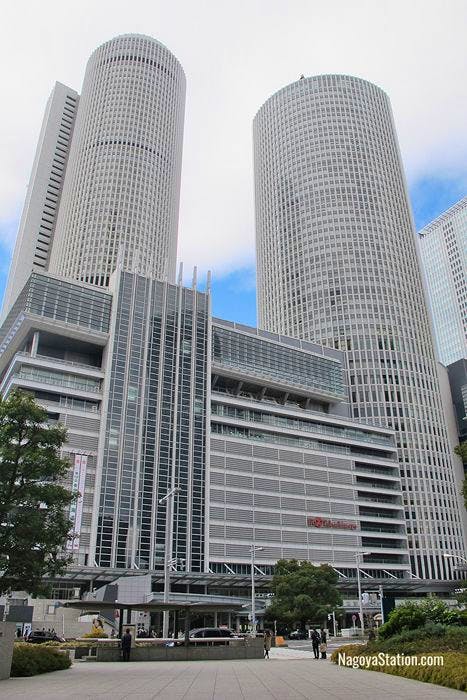
Nagoya Station Building
Nagoya Station is also housed in one of Japan’s biggest station complexes, with JR Nagoya Takashimaya occupying the east side of the JR Central Towers complex. The Office Tower rises 51 floors above ground and houses offices; the Hotel Tower rises 53 floors above ground and houses the Nagoya Marriott Associa Hotel. JR Gate Tower is also connected to the station complex.
The railway station itself however, is located on the 1st and 2nd floors of this building and it is quite easy to navigate. In this article we will explain the general layout of the station and introduce some of the useful facilities that are available.
Nagoya Station Layout
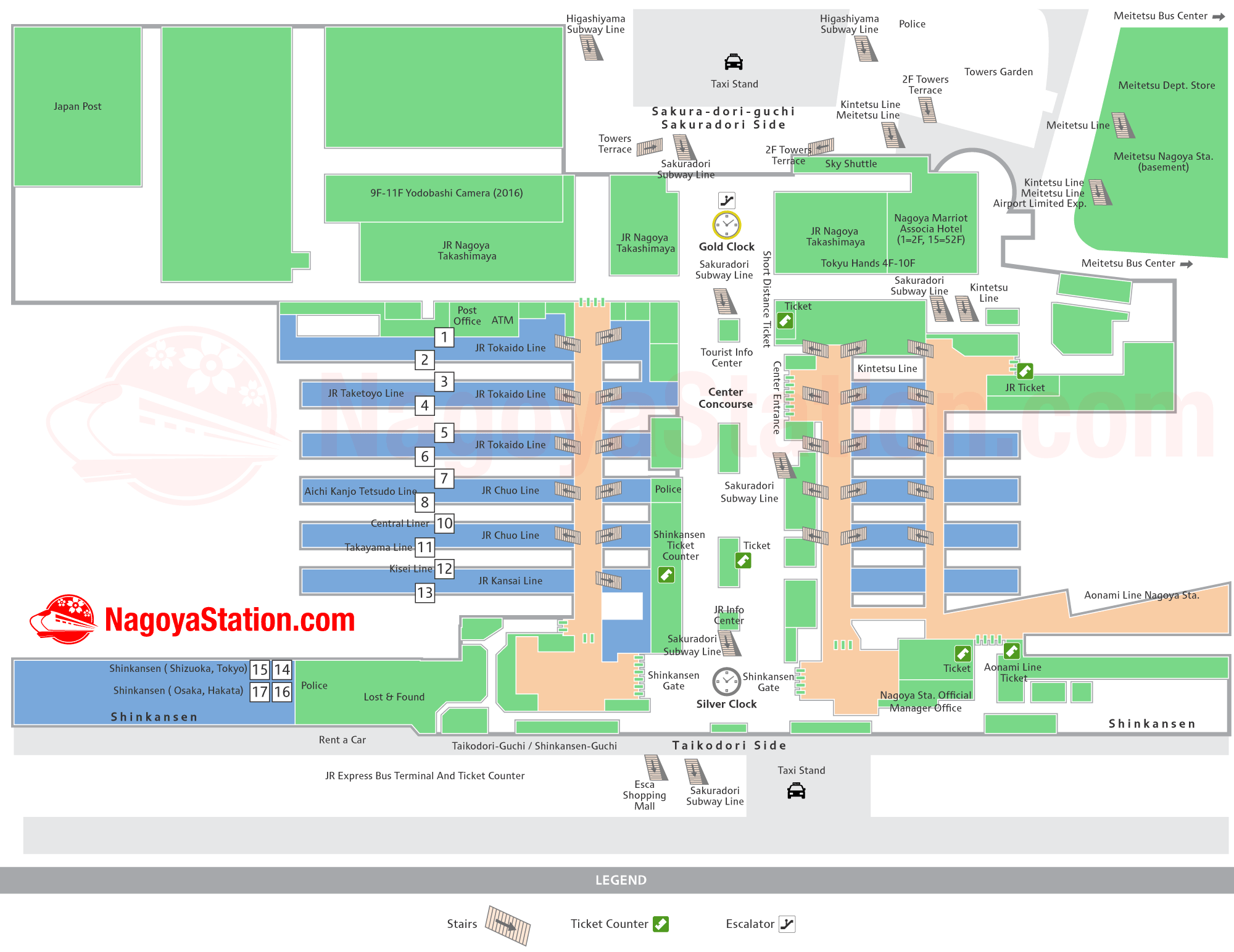
Nagoya Station can be accessed from the 1st floor of the station building. Here you will find all the ticket offices, ticket machines and ticket gates. The basic structure of the station is fairly simple. There are two main exits with a Central Walkway running between them. On the east side of the building is the Sakura-Dori Exit, and on the west side of the building is the Taiko-Dori Exit. There are large clocks at either end of this walkway that make useful meeting points. The Gold Clock is at the Sakura-Dori end of the walkway and the Silver Clock at the Taiko-Dori end.
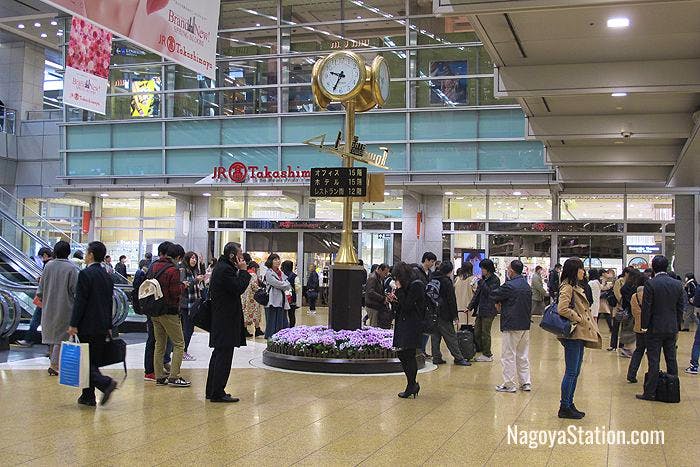
The Sakura-Dori side Gold Clock
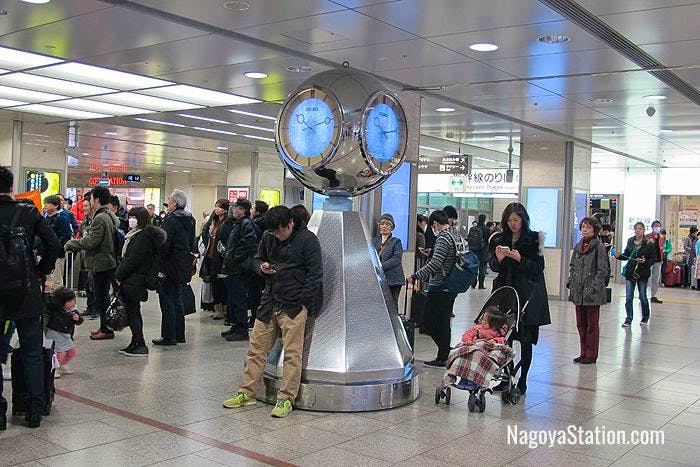
The Taiko-Dori side Silver Clock
There are taxi ramps outside both of these exits. The main city bus terminal is the Nagoya Station Bus Terminal on the Sakura-Dori/JR Gate Tower side of the station, while some city bus stops also use the Taiko-Dori-guchi side. The Me~guru sightseeing bus boards at Nagoya Station bus stop no. 11, so check the current terminal map before lining up. On the Taiko-Dori/Shinkansen side, close to the Shinkansen North Ticket Gates, you can find the JR Highway Bus stops and ticket office.
Popular Hotels in Nagoya

There are five sets of ticket gates for the JR conventional lines. This means you can quickly access the rail lines from any approach to the station building.
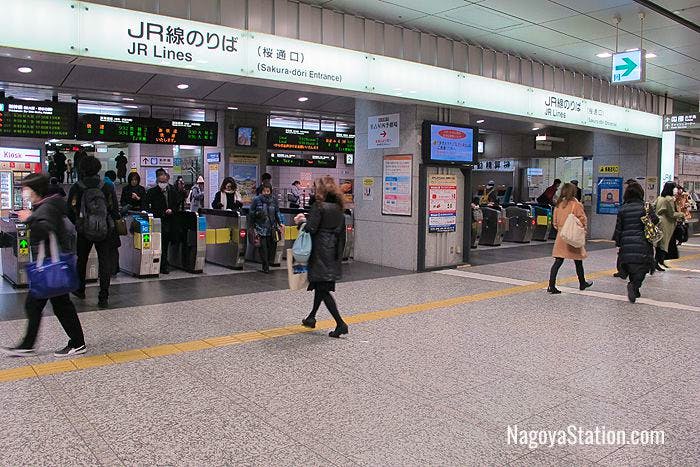
The Sakura-Dori Ticket Gates are on the north east side of the station
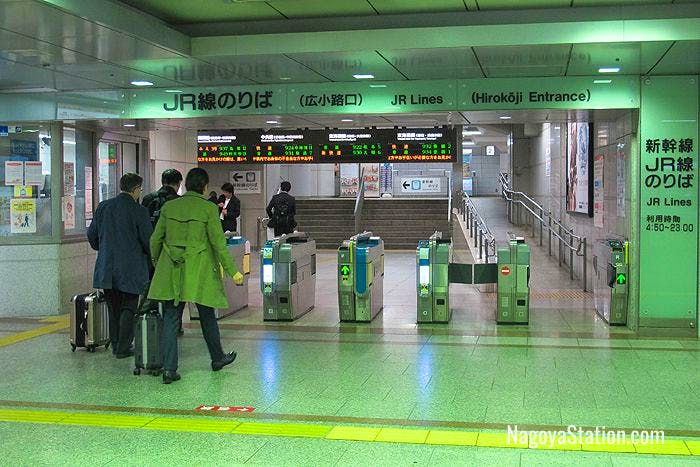
The Hirokoji Ticket Gates on the south east side of the station
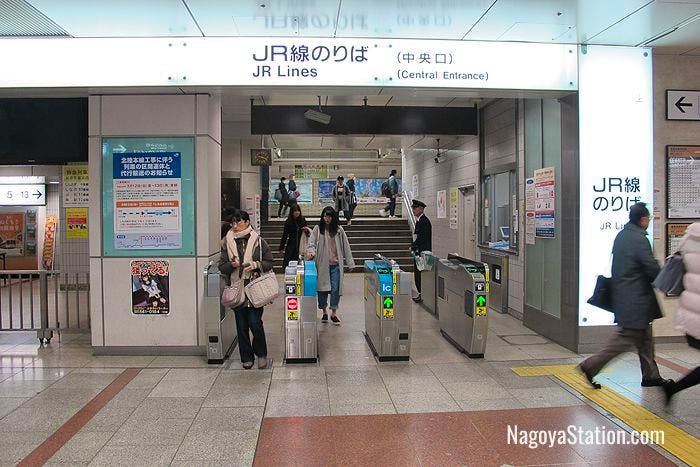
The Central Ticket Gates are on the south side of the Central Walkway
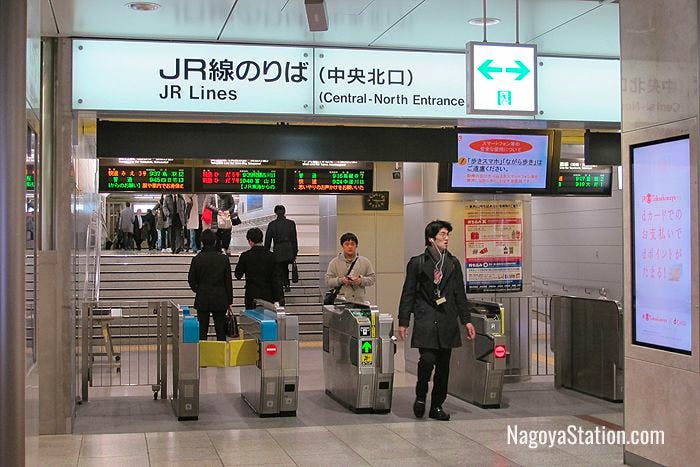
The Central North Ticket Gates are on the north side of the Central Walkway
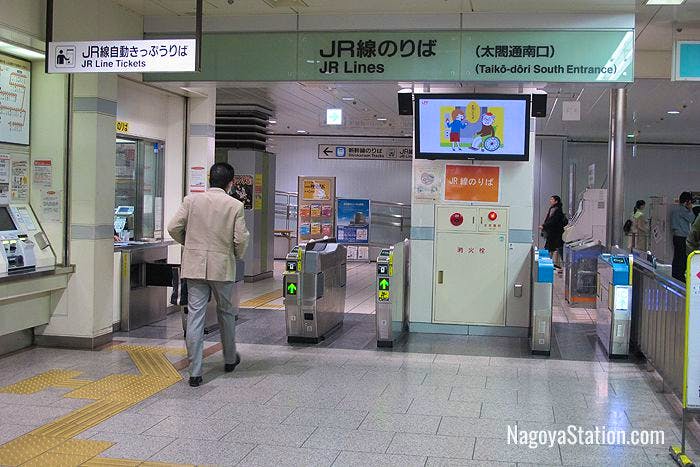
The Taiko-Dori South Ticket Gates are on the south west side of the station
Right beside the Taiko-Dori South Ticket Gates are the gates for the Nagoya Rinkai Rapid Transit Aonami Line.
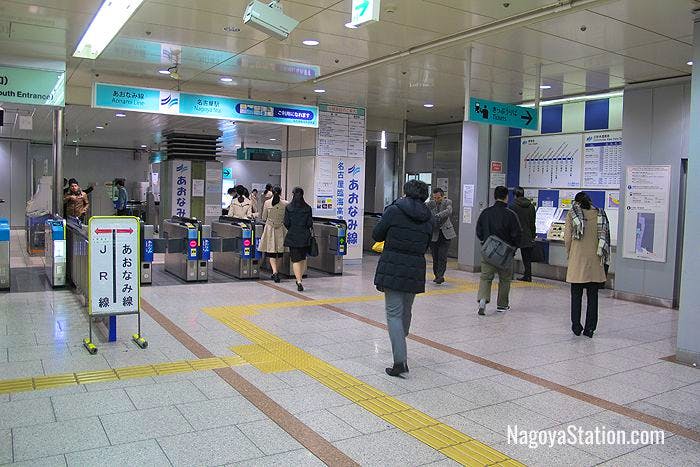
The entrance to the Aonami Line
There are two sets of ticket gates for the Shinkansen tracks on the west Taiko-Dori side of the station: the Shinkansen North Ticket Gates and the Shinkansen South Ticket Gates. There are also transfer gates for direct access between the JR lines and the Shinkansen lines.
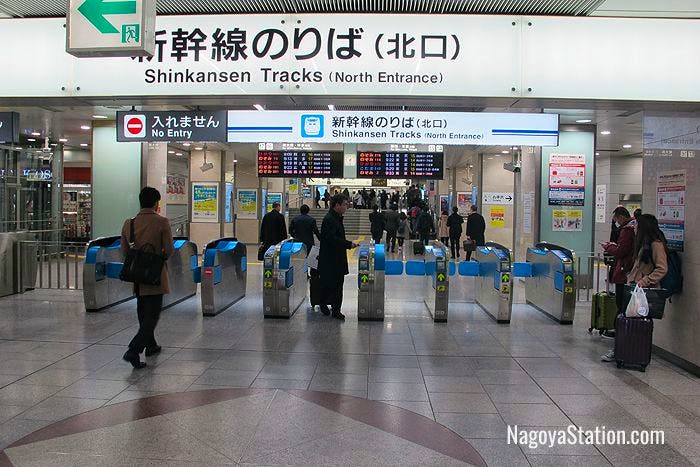
Shinkansen North Ticket Gates
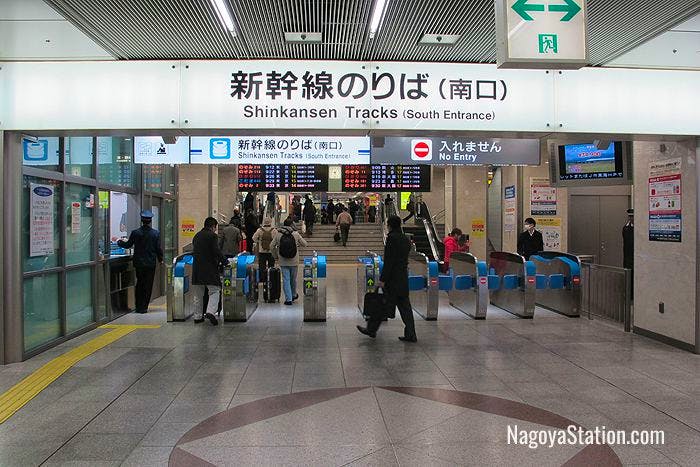
Shinkansen South Ticket Gates
You can find ticket machines and ticket offices located close to all these ticket gates.
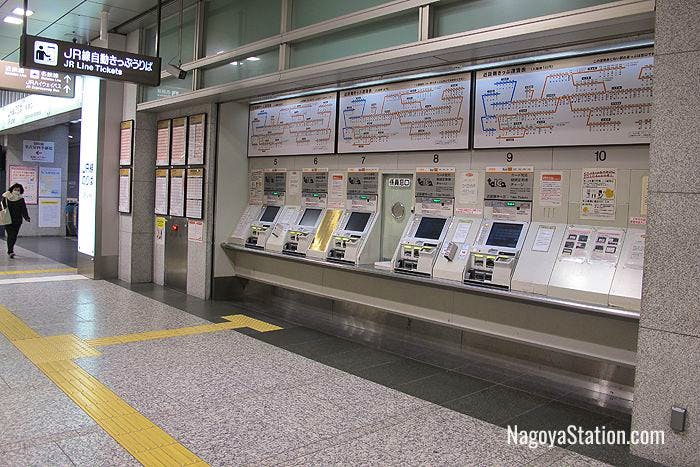
JR ticket machines at Nagoya Station
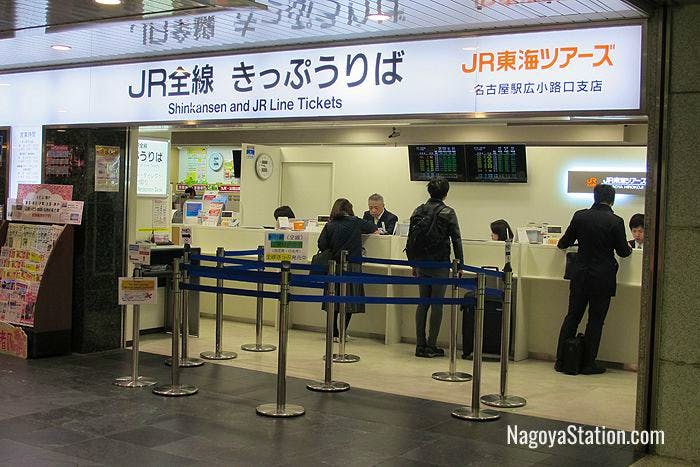
There are several JR ticket offices at Nagoya Station
JR Platforms
JR conventional-line platforms are numbered 1 to 13, but there is no passenger Platform 9 and Platform 1 is currently closed because of construction, so ordinary passengers normally use platforms 2-8 and 10-13. The 9th rail track is used for freight trains carrying cargo bound for Nagoya Port, so it does not need a platform for passengers. Here are the JR conventional-line platforms with the train lines and limited express services they usually serve. Click on the links to learn more about each line, and check the departure boards on the day of travel because platforms can change.
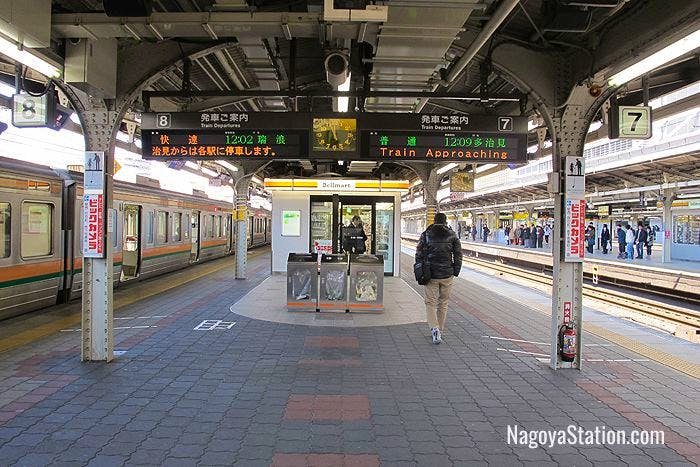
Platforms 7 and 8 at Nagoya Station
Platforms 2, 3, and 4: Boarding for Tokaido Main Line services bound for Okazaki and Toyohashi.
Platform 4: Boarding for the Limited Express Shirasagi bound for Tsuruga, with onward Hokuriku Shinkansen connections for Fukui and Kanazawa.
Platforms 4, 5 and 6: Boarding for Tokaido Main Line services bound for Gifu and Ogaki.
Platforms 7, 8 and 10: Boarding for Chuo Main Line services bound for Tajimi, Ena, and Nakatsugawa.
Platform 10: Boarding for the Limited Express Shinano bound for Nagano.
Platform 11: Boarding for the Limited Express Hida bound for Gifu, Gero, Takayama, and Toyama.
Platforms 11, 12, and 13: Boarding for Kansai Main Line services bound for Kuwana, Yokkaichi, and Kameyama.
Platform 12: Boarding for the Limited Express Nanki bound for Shingu and Kii-Katsuura.
Platforms 12 and 13: Boarding for the Rapid Mie service bound for Ise-shi and Toba.
Shinkansen Platforms
Platforms 14 to 17 at Nagoya Station are Shinkansen platforms and are accessed via separate gates. For more detailed information on these services see our article on the Tokaido Shinkansen.
Platforms 14 and 15: Boarding for Shinkansen services bound for Shizuoka, Shin-Yokohama, and Tokyo.
Platforms 16 and 17: Boarding for Shinkansen services bound for Kyoto, Shin-Osaka, and Hakata.
Finding the Kintetsu, Meitetsu, and Nagoya Subway Stations
To find Kintetsu Nagoya Station and Meitetsu Nagoya Station head towards the south east side of the station near the Hirokoji Ticket Gates, then follow the signs.
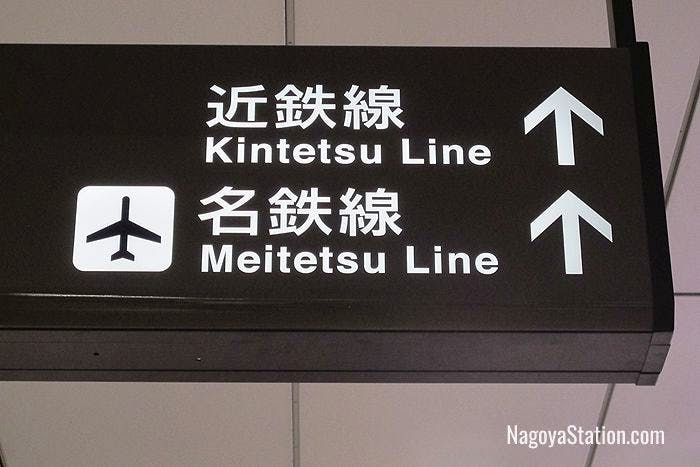
Signs point the way to the Kintetsu and Meitetsu stations
Nagoya Subway Station can be reached by following signs from the Sakura-Dori side into the underground concourse. The Higashiyama Line platforms are on basement level 2 and the Sakura-dori Line platforms are on basement level 3, with separate gates and multiple entrances around the station area.
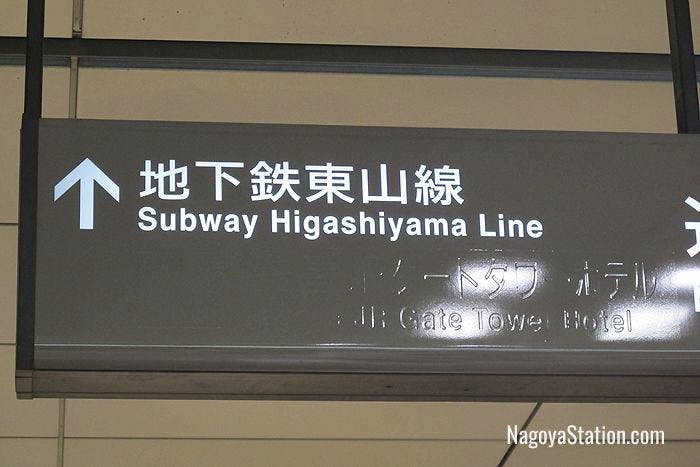
A sign pointing the way for the subway
Article and original photos by Michael Lambe. All rights reserved. Last updated 19-Jul-2026.